Mar 24, 2018

MDM MA NEW MENU MA NAKKI KAREL VANGI NA JATHTHA NA PRAMAN BABATE LATEST PARIPATRA SEE HERE


MDM MA NEW MENU MA NAKKI KAREL  VANGI  NA JATHTHA NA PRAMAN  BABATE LATEST PARIPATRA SEE HERE

Midday Meal Scheme is a school mealprogramme of the Government of Indiadesigned to improve the nutritional status of school-age children nationwide.[1] The programme supplies free lunches on working days for children in primary and upper primary classes in government, government aided, local body, Education Guarantee Scheme, and alternate innovative education centres, Madarsa and Maqtabs supported under Sarva Shiksha Abhiyan, and National Child Labour Project schools run by the ministry of labour.[2] Serving 120,000,000 children in over 1,265,000 schools and Education Guarantee Scheme centres, it is the largest such programme in the world.[3]

Mar 23, 2018

NEW GCERT GUJARATI MEDIUM BOOK NI PRICES SEE HERE


NEW GCERT GUJARATI MEDIUM BOOK NI PRICES SEE HERE

The history of textbooks dates back to civilizations of ancient history. For example, Ancient Greeks wrote texts intended for education. The modern textbook has its roots in the standardization made possible by the printing press. Johannes Gutenberg himself may have printed editions of Ars Minor, a schoolbook on Latin grammar by Aelius Donatus. Early textbooks were used by tutors and teachers, who used the books as instructional aids (e.g., alphabet books), as well as individuals who taught themselves.
The Greek philosopher Plato lamented the loss of knowledge because the media of transmission were changing.[3] Before the invention of the Greek alphabet 2,500 years ago, knowledge and stories were recited aloud, much like Homer's epic poems. The new technology of writing meant stories no longer needed to be memorized, a development Socrates feared would weaken the Greeks' mental capacities for memorizing and retelling. (Ironically, we know about Socrates' concerns only because they were written down by his student Plato in his famous Dialogues.) [4]
The next revolution for books came with the 15th-century invention of printing with changeable type. The invention is attributed to German metalsmith Johannes Gutenberg, who cast type in molds using a melted metal alloy and constructed a wooden-screw printing press to transfer the image onto paper.


Gunostav-8 no samay kayo rahese see here latest paripatra


Gunostav-8 no samay kayo rahese see here latest paripatra

Gunotsav is a quality enhancement initiative of the State for bringing about improvement in learning levels of students at Elementary level. Hon’ble Minister, Education, Assam has already announced the implementation of the programme in his budget speech. It aims to evaluate schools and students of schools in order to assess their performance and design strategies to bring about quality improvement in levels of learning as well as in the school environment. Assessment will be done on four core areas viz Academic achievement of children of Class-2 to 8 , Co-scholastic activities, Availability and Utilization of School Infrastructure and other facilities and Community Participation.
The programme will be conducted from 4th to 7th April, 2017. The whole State Govt machinery will be involved in the programme. In the 1st phase, eight districts viz. Barpeta, Chirang, Dibrugarh, Hailakandi, Kamrup-Metro, Lakhimpur, Morigaon and Karbi Anglong ( West) will be covered under the programme. All schools (Govt./Prov(in case of Composite school elementary level will be considered) & Tea Garden Managed Schools of all mediums will be covered under the programme. Hon’ble Chief Minister, Hon’ble Minister, Education, other Ministers, Class I & II officers including IAS, IPS, IFS, ACS officers of the state will be visiting schools as External Evaluators for the assessment. Each External Evaluator will visit 3 schools - one school on each of the three days i.e 5th , 6th and 7th April, 2017. They will be spending one full day in the school from Morning Assembly till completion of school evaluation. Their observations and recommendations will be taken into consideration for formulation of policy and designing effective strategy for improving quality elementary education.

Pranga sixako nI TALIM BABATE SSA no latest paripatra see here

Click here to view

Pranga sixako nI TALIM BABATE SSA no latest paripatra see here

The s-curve derives from an assumption that new products are likely to have "product life" – i.e., a start-up phase, a rapid increase in revenue and eventual decline. In fact the great majority of innovations never get off the bottom of the curve, and never produce normal returns.
Innovative companies will typically be working on new innovations that will eventually replace older ones. Successive s-curves will come along to replace older ones and continue to drive growth upwards. In the figure above the first curve shows a current technology. The second shows an emerging technology that currently yields lower growth but will eventually overtake current technology and lead to even greater levels of growth. Th

Mar 22, 2018

Father of different subject mean inventor


Innovation can be defined simply as a "new idea, device or method".[1] However, innovation is often also viewed as the application of better solutions that meet new requirements, unarticulated needs, or existing market needs.[2] This is accomplished through more-effective productsprocessesservicestechnologies, or business models that are readily available to marketsgovernments and society. The term "innovation" can be defined as something original and more effective and, as a consequence, new, that "breaks into" the market or society.[3] It is related to, but not the same as, invention,[4] as innovation is more apt to involve the practical implementation of an invention (i.e. new/improved ability) to make a meaningful impact in the market or society,[5] and not all innovations require an invention. Innovation is often manifested via the engineering process, when the problem being solved is of a technical or scientific nature. The opposite of innovation is exnovation.


GUNOSTAV+8 MATE NO VIDEO JUO SEE

Click here to view

GUNOSTAV+8  MATE NO VIDEO JUO SEE

Primary education is the foundation on which the development of every citizen and the nation as a whole built on. In recent past, India's improved education system is often cited as one of the main contributors to the economic development of India. At the same time, the quality of elementary education in India has also been a major concern. Student of primary school at least have basic knowledge of reading, writing and simple mathematics equations which may be helpful in performing their daily activities

Mar 21, 2018

What Colors Should You Expect from the Flame Test?

What Colors Should You Expect from the Flame Test?


From left to right, these are flame test colors of cesium chloride, boric acid, and calcium chloride.
 From left to right, these are flame test colors of cesium chloride, boric acid, and calcium chloride. (c) Philip Evans / Getty Images

The flame test is a fun and useful analytical technique to help you identify the chemical composition of a sample based on the way it changes the color of a flame. However, interpreting your results can be tricky if you don't have a reference. There are many shades of green, red, and blue, usually described with color names you wouldn't even find on a crayon box! So, here are some sample photographs of flame test colors. Keep in mind, your results may vary depending on your technique and the purity of your sample. It's a good place to start, though.

Flame Test Colors Depend on Technique


It's common to view a flame test result through a filter.
 It's common to view a flame test result through a filter. Westend61 / Getty Images

Before I get into the photos, you need to remember the color you should expect will depend on the fuel you are using for your flame and whether or not you're viewing the result with the naked eye or through a filter. It's a good idea to describe your result in as much detail as you can. You might want to take pictures with your phone to compare results from other samples.

Sodium - Yellow Flame Test


Sodium salts burn yellow in the flame test.
 Sodium salts burn yellow in the flame test. Trish Gant / Getty Images

Most fuels contain sodium (e.g., candles and wood), so you're familiar with the yellow color this metal adds to a flame. The color is muted when sodium salts are placed in a blue flame, like a Bunsen burner or alcohol lamp. Be aware, sodium yellow overwhelms other colors. If your sample has any sodium contamination, the color you observe may include an unexpected contribution from yellow!
Iron can also produce a golden flame (although sometimes orange).

Potassium - Purple in a Flame Test


Potassium and its compounds burn violet or purple in a flame test.
 Potassium and its compounds burn violet or purple in a flame test. Dorling Kindersley, Getty Images

Potassium salts produce a characteristic purple or violet color in a flame. Assuming your burner flame is blue, it may be difficult to see a big color change. Also, the color may be paler than you expect (more lilac).

Cesium - Purple-Blue in a Flame Test


Cesium turns a flame violet in a flame test.
 Cesium turns a flame violet in a flame test. (c) Philip Evans / Getty Images

The flame test color you're most likely to confuse with potassium is cesium. Its salts color a flame violet or blue-purple. The good news here is most school labs don't have cesium compounds. Side-by-side, potassium tends to be paler and have a slight pink tint. It may not be possible to tell the two metals apart using only this test.

Strontium - Red Flame Test


Strontium compounds turn a flame red.
 Strontium compounds turn a flame red. Dorling Kindersley / Getty Images

The flame test color for strontium is the red of emergency flares and red fireworks. It's a deep crimson to brick red.

Barium - Green Flame Test


Barium salts produce a yellow-green flame.
 Barium salts produce a yellow-green flame. stay hungry for more, Getty Images

Barium salts produce a green flame in the flame test. It's usually described as a yellow-green, apple green, or lime green color. The identity of the anion and the concentration of the chemical matter. Sometimes barium produces a yellow flame without noticeable green.
Manganese(II) and molybdenum may also yield yellow-green flames.

Copper(II) - Green Flame Test


This is the green flame test result from a copper(II) salt.
 This is the green flame test result from a copper(II) salt. Trish Gant / Getty Images

Copper colors a flame green, blue, or both depending on its oxidation state. Copper(II) produces a green flame. The compound it's mostly likely to be confused with is boron, which produces a similar green.

Copper(I) - Blue Flame Test


This is a blue-green flame test result from a copper compound.
 This is a blue-green flame test result from a copper compound. Dorling Kindersley / Getty Images

Copper(I) salts produce a blue flame test result. If there is some copper(II) present, you'll get blue-green.

Boron - Green Flame Test


This fire vortex is colored green using a boron salt.
 This fire vortex is colored green using a boron salt. Anne Helmenstine

Boron colors a flame bright green. It's a common sample for a school lab because borax is readily available in many places.

Lithium - Hot Pink Flame Test


Lithium salts turn a flame hot pink to magenta.
 Lithium salts turn a flame hot pink to magenta. stay hungry for more, Getty Images

Lithium yields a flame test somewhere between red and purple. It's possible to get a vivid hot pink color, although more muted colors are also possible. It's less red than strontium. It's possible to confuse the result with potassium.
Another element which may produce a similar color is rubidium. For that matter, so can radium, but it's not commonly encountered.

Calcium - Orange Flame Test


Calcium carbonate produces an orange flame test color.
 Calcium carbonate produces an orange flame test color. Trish Gant / Getty Images

Calcium salts produce an orange flame. However, the color may be muted, so it can be hard to distinguish between the yellow of sodium or gold of iron. The usual lab sample is calcium carbonate. If the specimen is not contaminated with sodium, you should get a nice orange color.

Blue Flame Test Results


A blue flame test might not tell you which element is present, but at least you know which ones to exclude.
 A blue flame test might not tell you which element is present, but at least you know which ones to exclude. Dorling Kindersley / Getty Images

Blue is tricky, because it's the usual color of a methanol or burner flame. Other elements that can impart a blue color to a flame test are zinc, selenium, antimony, arsenic, lead, and indium. Plus, there are a host of elements that don't change the color of a flame. If the flame test result is blue, you won't get much information, except you can exclud

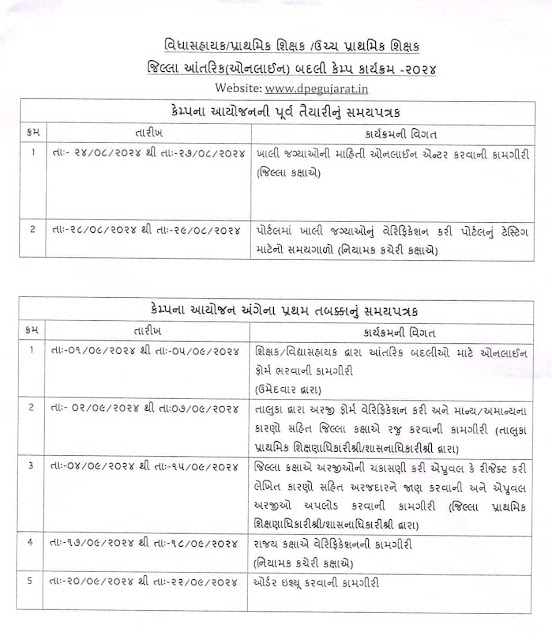
ગુજરાત પ્રાથમિક શિક્ષક બદલી કેમ્પ 2024

આ લિંક પરથી તમે બદલી ઓર્ડર ડાઉનલોડ કરી શકશો.. બદલી હુકમ અહીથી ડાઉનલોડ કરો ઓનલાઇન બદલી હુકમ આજથી બાબતનો  જિઆર અહીથી વાંચો 💥 *બદલી ઓર્ડર ડાઉન...