Showing posts with label NPS. Show all posts

Mar 27, 2019

NPS ma 10% thi vadharo ne 14% kapat no karyo amal 1/4/2019 thi see here

NPS ma 10% thi vadharo ne 14% kapat no karyo amal 1/4/2019 thi see here

Click here for view and download


Aaj ka gyan

After commissioning, Schlesien was assigned to I Battle Squadron of the High Seas Fleet, later being transferred to II Battle Squadron. She was primarily occupied with training cruises and fleet maneuvers in her early career. She served with the fleet throughout the first two years of World War I, seeing action at the Battle of Jutland on 31 May – 1 June 1916, where she was briefly actively engaged in combat. After Jutland, the Imperial Navy relegated Schlesien to guard duties before withdrawing her altogether in 1917, when she became a training ship. The Treaty of Versailles permitted the German navy to keep eight obsolete battleships, including Schlesien, to defend the German coast. Initially kept in reserve, she was modernized in the mid-1920s and saw extensive service with the reorganized Reichsmarine.
Schlesien saw limited combat during World War II, briefly bombarding Polish forces during the invasion of Poland in September 1939. She escorted minesweepers during Operation Weserübung, the invasion of Norway and Denmark in April 1940. After the operation, she was given secondary duties, primarily serving as a training ship and icebreaker. She ended her career providing fire support in the Baltic coast of occupied Poland. While off Swinemünde on 3 May 1945, she struck a mine and was towed into Swinemünde, where she was sunk by her crew in shallow water, though much of her superstructure, including her main battery, remained above water. In the remaining days of the war, Schlesien used her anti-aircraft guns to defend the city from air attack. After the end of the war, she was broken up, though some parts of the ship remained visible until the 1970s.

Apr 4, 2018

NPS KHATA MATHI UPAD MATE NO HUKAM NO NAMUNO SEE HERE

NPS KHATA MATHI UPAD MATE NO HUKAM NO NAMUNO SEE HERE 

The National Pension System (NPS) is a voluntary defined contribution pension system administered and regulated by the Pension Fund Regulatory and Development Authority(PFRDA), created by an Act of the Parliament of India. The NPS started with the decision of the Government of India to stop defined benefit pensions for all its employees who joined after 1 January 2004. While the scheme was initially designed for government employees only, it was opened up for all citizens of India in 2009. NPS is an attempt by the government to create a pensioned society in India. In its overall structure NPS is closer to 401(k) plans of the United States. Today, the NPS[12] is readily available and tax efficient under Section 80CCC and Section 80CCD. Under the NPS, an individual can contribute to his retirement account. Also, his employer can contribute to the welfare and social security of the individual.
NPS is a quasi-EET instrument in India where 40% of the corpus escapes tax at maturity, while 60% of the corpus is taxable.[13][14][15] Of the 60% taxable corpus, 40% is tax-exempt as it has to be compulsorily used to purchase an annuity.[16] The annuity income will be taxed, though. The remaining 20% alone will now be taxed at slab rates on withdrawal.[17]NPS offers subscribers a choice of two record keeping agencies: NCRA (NSDL-CRA) and KCRA (Karvy-CRA).[18][19] In 2017 Union budget of India, 25% exemption of the contribution made by an employee has been announced as a form of premature partial withdrawal in NPS.[20] This amendment will take effect on 1 April, 2018 and will, accordingly, apply in relation to the assessment year 2018-19.[21][22] NPS is a market-linked annuity product.[23]

Mar 24, 2018

FULL PAY THAYA PACHI THODA MAHINA PACHI CPF KAPAT KARAVI HOY TEVA SIXAKO MATE GOOD NEWS SEE HERE


FULL PAY MA THAYELA HOY PAN CPF ACCOUNT THODA MAHINA PACHI OPEN TEO MATE FULL PAY THI KAPAT KARAVA MATE GOOD NEWS 

National Pension Scheme, also known as NPS, is a quasi-EET instrument in India where 40% of the corpus escapes tax at maturity, while 60% of the corpus is taxable.[1][2][3] Of the 60% taxable corpus, 40% is tax-exempt as it has to be compulsorily used to purchase an annuity.[4] The annuity income will be taxed, though. The remaining 20% alone will now be taxed at slab rates on withdrawal.[5] From 2016, an additional tax benefit of Rs 50,000 under Section 80CCD(1b) is provided under NPS, which is over the Rs 1.5 lakh exemption of Section 80C.[6][7][8] Fund management and asset allocation are important parts of NPS.[9][10][11] NPS is considered one of the best best tax saving instrument, after 40% of the corpus was made tax-free at the time of maturity and it is ranked just below Equity-linked savings scheme(ELSS).[12] NPS offers subscribers a choice of two record keeping agencies: NCRA (NSDL-CRA) and KCRA (Karvy-CRA).[13][14] In 2017 Union budget of India, 25% exemption of the contribution made by an employee has been announced as a form of premature partial withdrawal in NPS.[15] This amendment will take effect on 1 April, 2018 and will, accordingly, apply in relation to the assessment year 2018-19.[16][17] NPS is a market-linked annuity product.[18]

ADD MY WHATSAPP NUMBER 7600984093 IN YOUR GROUP

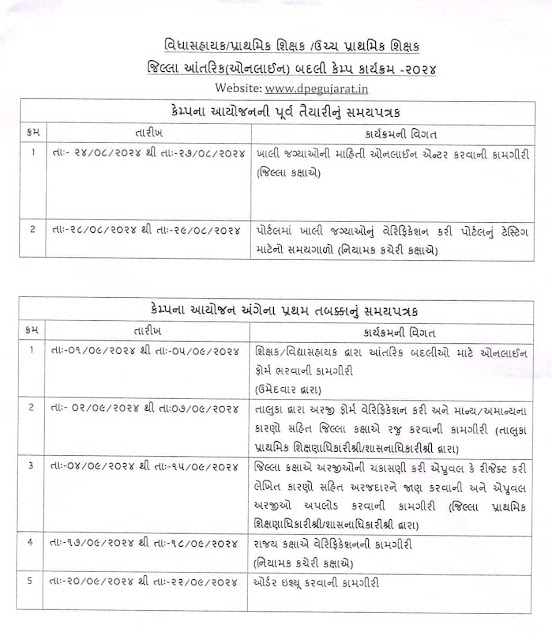
ગુજરાત પ્રાથમિક શિક્ષક બદલી કેમ્પ 2024

આ લિંક પરથી તમે બદલી ઓર્ડર ડાઉનલોડ કરી શકશો.. બદલી હુકમ અહીથી ડાઉનલોડ કરો ઓનલાઇન બદલી હુકમ આજથી બાબતનો  જિઆર અહીથી વાંચો 💥 *બદલી ઓર્ડર ડાઉન...